

CoPilot advised me to uncheck box under Security "Block dangerous and deceptive content"

The goal is to avoid Google. Copilot advise me to under Security, to uncheck the box "Block dangerous and deceptive content". Is that advisable - should I comply?
Alle svar (2)
Hello
How does built-in Phishing and Malware Protection work https://support.mozilla.org/en-US/kb/how-does-phishing-and-malware-protection-work
Security/Safe Browsing/V4 Implementation https://wiki.mozilla.org/Security/Safe_Browsing/V4_Implementation Security/Safe Browsing https://wiki.mozilla.org/Security/Safe_Browsing Since the release of https://www.mozilla.org/en-US/firefox/56.0/releasenotes Updated the Safe Browsing protocol to version 4 Since the release of https://www.firefox.com/en-US/firefox/147.0/releasenotes Firefox now supports the Safe Browsing V5 protocol and is migrating from Safe Browsing V4 to the local list mode of Safe Browsing V5 protocol.
https://www.phishtank.com/stats.php https://www.phishtank.com/phish_detail.php?phish_id=9333105 View site in new window
Enter in Firefox address bar about:url-classifier
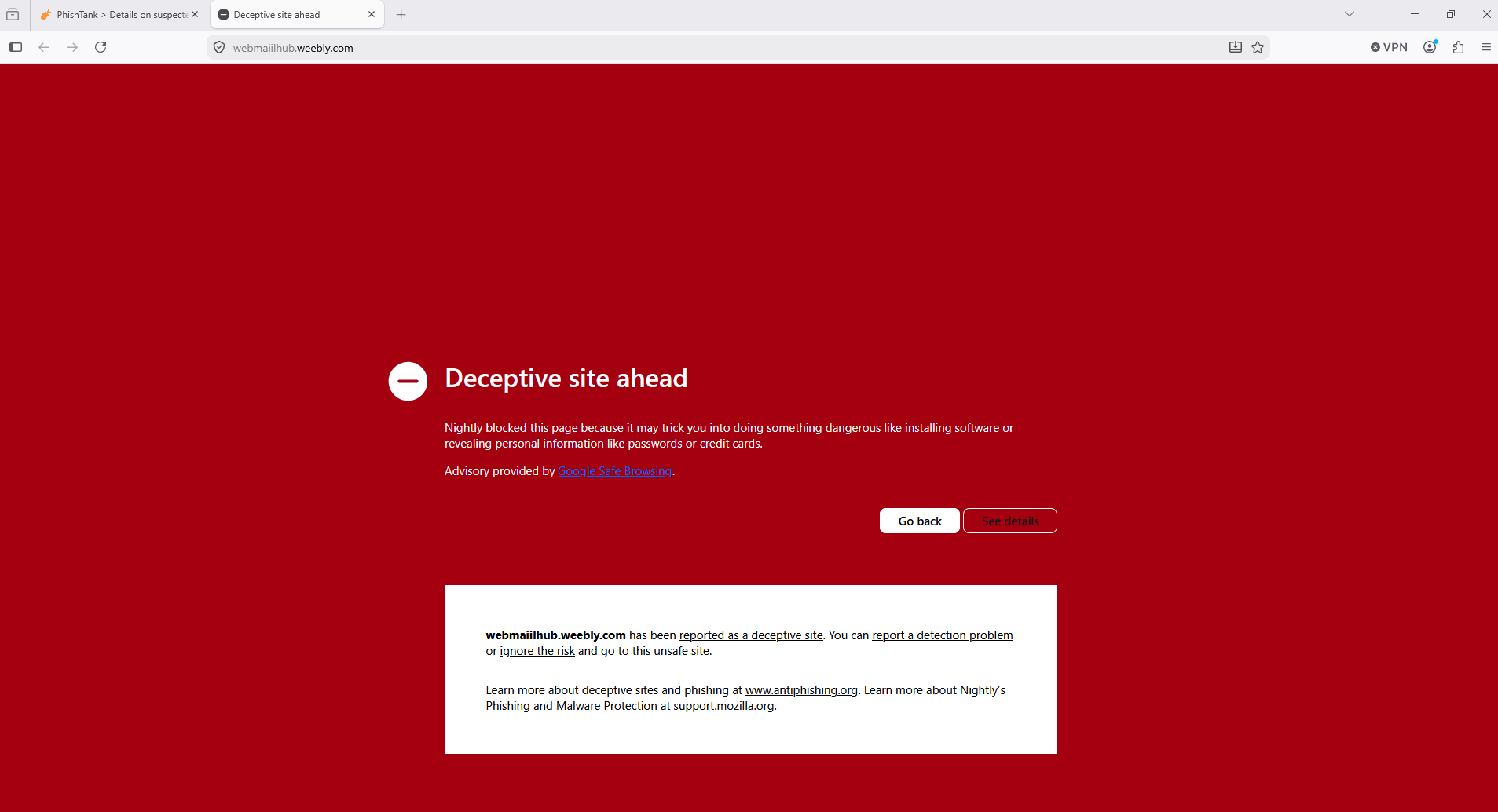
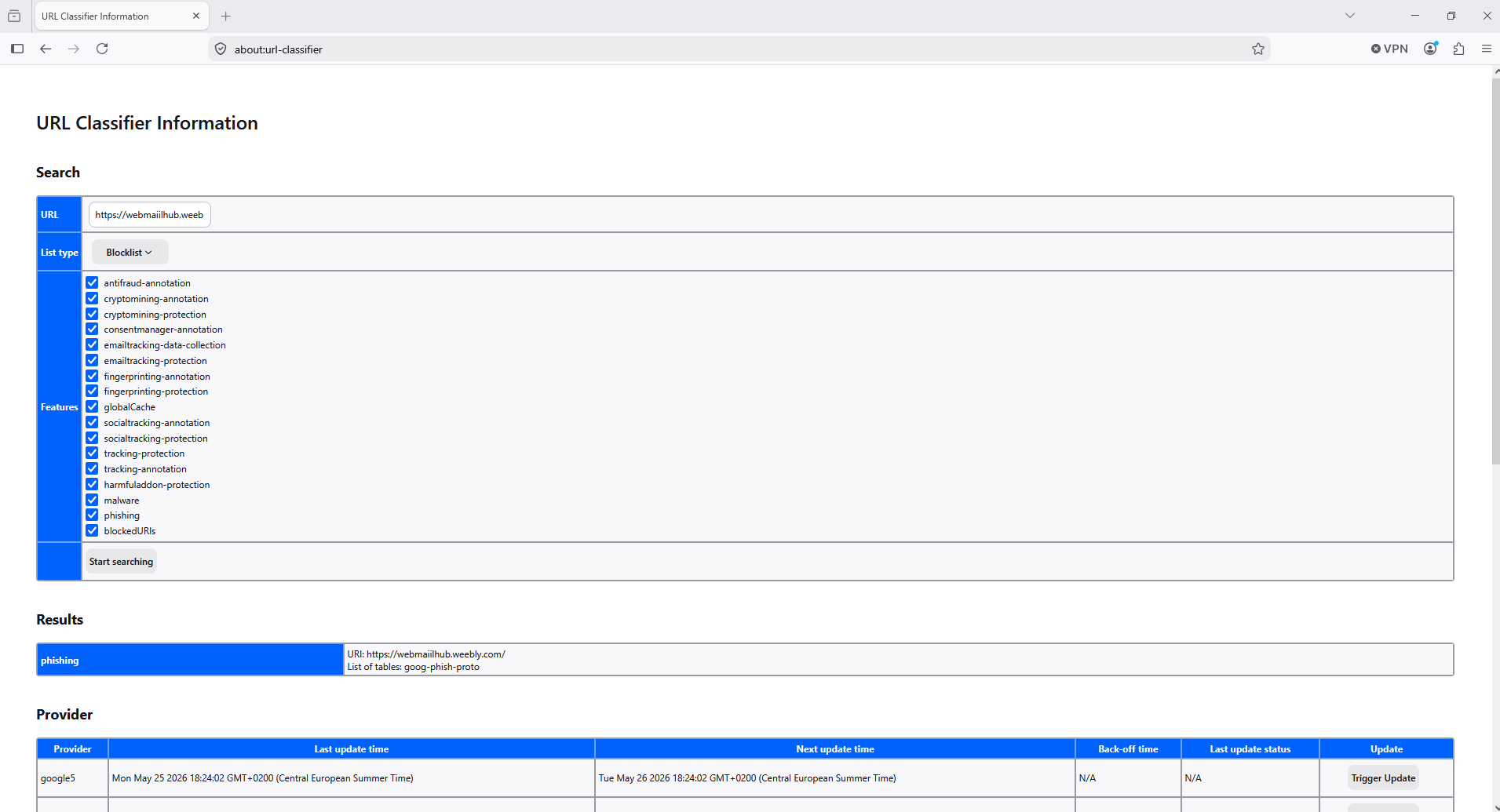
That depends. The data is provided by https://en.wikipedia.org/wiki/Google_Safe_Browsing and given v5+ hashes them, and it's also available by OHTTP (i.e. they won't know "who" is asking), it might be worth researching if OHTTP is being used for it already (or file a bug if not).
You might be able to replace this functionality partly with other security offerings (e.g. my filtering DNS provider jumps in too, but they only catch whole domains, not just individual paths like a known drive.google.c/••• malicious download and similar…), or see if using VPN cloaks the request activity — if what you're asking is for "tracking" or "profiling" reasons.
If the question is more about matter of choice not get anywhere close to services from that company, that's whole another question, as they run giant web infrastructure operations (GCP, with DNS/CA/PKI functions) that you basically need to trust and use for a huge portion of teh internet to even open for you. Almost every big organization you'd need to interface with will have a third of their services from Microsoft, third from Google, and third from Amazon, or something similar:[… so it kinda depends on what your reasons "to avoid Google", materially, are.